Guides / Materials
Machined Ceramic Insulators: What Can Be Made in Vietnam and What Cannot
October 13, 2026
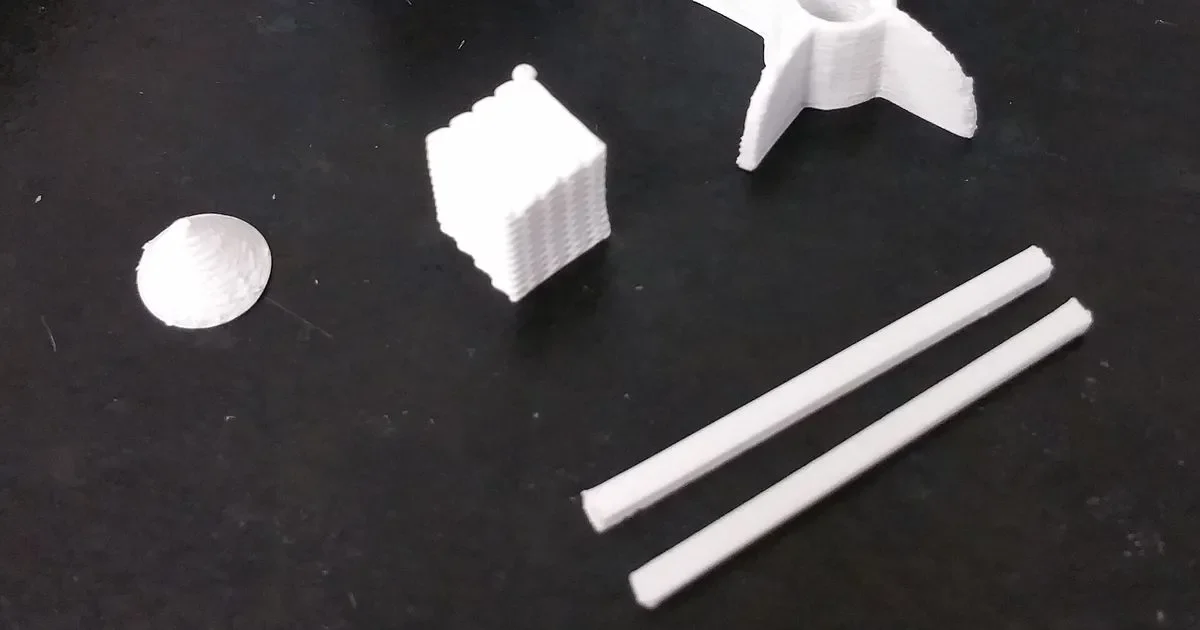
Ceramic insulators show up in semiconductor tooling wherever a part must stay electrically isolating, hard, flat or stable at temperature: burn-in sockets, probe and contact guides, heater block covers, wire bonding work holders, pick and place tips. They are also the category where a buyer is most likely to hear “yes, we can” from a shop that is not sure.
This guide separates the main ceramics, explains how each is shaped and gives a candid account of what the Vietnamese supply chain does and does not provide.
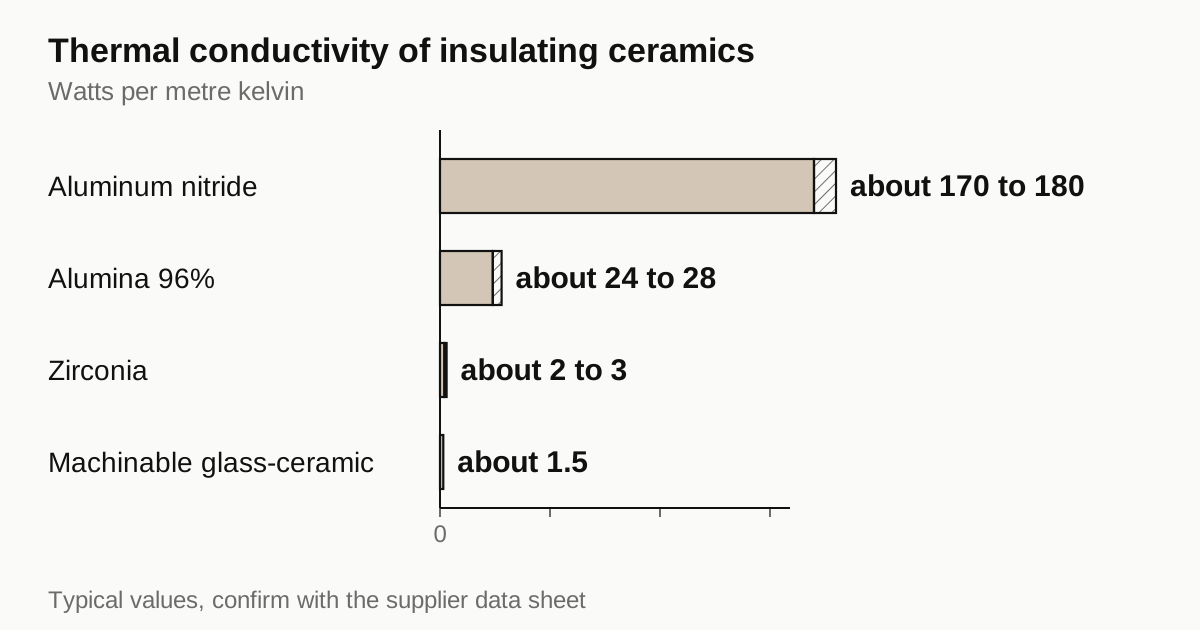
The four ceramics you will meet
Alumina (aluminum oxide), 96 and 99.5 percent. The workhorse. Hard, electrically insulating, stable to high temperature, reasonably priced. The 96 percent grade covers most uses. The 99.5 percent grade is denser and finer, and is chosen for cleanliness or high voltage.
Zirconia (yttria stabilized). Much tougher than alumina and the best choice for parts that take impact or flex, such as pins and thin walls. A poor thermal conductor.
Aluminum nitride. Electrically insulating and a good thermal conductor, close to some metals. Used as a heat spreader or heater substrate, where heat has to move but current must not.
Machinable glass-ceramic. A different class: it can be cut with ordinary carbide tools to final tolerance, and needs no sintering after machining. Convenient for prototypes and complex shapes. Not as hard or strong as the others.
| Material | Thermal conductivity, W/m·K | Max use temperature | Machining route | Typical use |
|---|---|---|---|---|
| Alumina 96% | about 24 to 28 | about 1,500 °C | Diamond grinding after sintering | Insulators, guides, wear parts |
| Zirconia | about 2 to 3 | about 1,000 °C | Diamond grinding | Pins, thin or loaded parts |
| Aluminum nitride | about 170 to 180 | about 1,000 °C in air | Diamond grinding | Heater and heat spreader parts |
| Machinable glass-ceramic | about 1.5 | about 800 °C continuous | Carbide tools as supplied | Prototypes, complex insulators |
Figures are typical for common grades and vary by supplier and purity. Always get the data sheet for the exact material.
How ceramic parts are made
Fully dense ceramic is not machined like metal. The sequence is:
- Forming. Ceramic powder is pressed, injection molded or extruded into a blank, called green.
- Green machining. The soft green blank can be cut easily, with simple tools, to near shape.
- Sintering. Fired in a kiln at around 1,500 to 1,700 °C for alumina. The part shrinks by 15 to 20 percent and becomes hard.
- Finish grinding. Diamond wheels bring the hard part to final size, flatness and finish.
- Inspection, cleaning and packing.
Steps 1 to 3 belong to ceramic manufacturers. Step 4 is the machining step a machine shop might perform. A shop that says it machines ceramic usually means step 4, or machinable glass-ceramic at the beginning.
What the Vietnamese supply chain does
Be careful here. A shop in Vietnam may do any of these, and it matters which:
- Machine machinable glass-ceramic and some plastics. This is within reach of a competent precision shop with sharp carbide tooling and a clean environment.
- Diamond grind sintered ceramic blanks. A smaller number of shops have the grinders, wheels and experience. It takes slow, low load grinding to avoid chipping.
- Buy finished parts from ceramic makers elsewhere. Ceramic blanks and finished parts usually come from specialists in Japan, Taiwan, China, Germany or the United States. A Vietnamese shop may source and inspect them for the buyer.
- Make the sintered ceramic itself. Very limited. Do not assume it.
If a buyer wants a custom ceramic part in a precise shape, the realistic routes are machinable ceramic made locally, ground blanks from a partner or an imported part with local inspection and assembly. The honest question for any shop is: which steps do you perform yourself, and which does a partner perform? The Vietnam machining map shows where precision shops sit, but ceramic grinding is a narrow specialty that no map covers.
Design rules that save money
Ceramic is brittle. The rules that work for metal fail here.
- Avoid sharp internal corners. Specify an internal radius of at least 0.5 mm. Sharp corners concentrate stress and crack.
- Chamfer or round external edges. An edge break of 0.2 to 0.3 mm avoids chipping in handling and in use.
- Keep walls thick enough. A minimum wall of about 1 mm for small parts, and more for long unsupported sections.
- Limit hole depth. A deep, small hole is hard to grind. A ratio of depth to diameter above about 5 raises cost steeply.
- Do not tolerate more than needed. A flat face to 0.005 mm is a routine grinder job. A bore position to 0.002 mm needs a measurement route that the shop may not have.
- Define the finish. As ground, lapped or polished each have a different price. See the surface finish Ra guide.
Mounting matters too. A ceramic part clamped with a rigid screw can crack at the contact. Use compliant washers or a soft seat, and say so on the assembly drawing.
Need a quote for this part? Get a quote
Thermal shock and expansion
Alumina tolerates high temperature but not fast change. A rapid temperature swing can crack a thick section. Aluminum nitride and zirconia behave differently, and the wall thickness and shape matter as much as the material. Ceramics also expand less than metals: alumina at about 7 to 8 ppm per kelvin against 23 for aluminum. A ceramic part bolted to an aluminum plate across a large temperature range loads its fasteners, so the design should allow movement or choose a closer match.
Electrical use and cleanliness
For insulators, the properties that matter are dielectric strength, surface resistivity and cleanliness. Alumina insulates well across a wide range, but a contaminated or porous surface leaks. Parts used near wafers or in a vacuum chamber usually need a defined cleaning step and sealed packaging. See outgassing and RGA testing for how contamination is checked, and ESD materials and coatings for the opposite case, where some conduction is wanted.
Prototype first, production second
Because the lead time on sintered ceramic is long and the cost of a failed batch is high, many buyers prototype in machinable glass-ceramic or even in plastic, prove the design in the fixture and then move to alumina or zirconia. The geometry that works in a softer material usually works in the hard one, with one exception: machinable ceramic tolerates sharp features and thin walls that sintered ceramic does not, so check the radii and wall thickness again before committing to the production material.
What drives the price
Ceramic parts are priced on the blank, the grinding time and the yield. The blank cost rises with size and purity. Grinding time rises with the number of ground faces, the tolerances and the hole count, because diamond wheels remove material slowly. Yield matters because a chip late in grinding scraps the whole part, and the shop prices in the risk. Three changes lower the cost without touching the function: loosen tolerances on faces that do not mate, leave surfaces as fired where they only need to be insulating and order the spares in the same batch as the first parts, since a second firing batch carries its own setup cost.
Inspection
Ceramic parts are measured with the same instruments as metal, with a few changes. Hard parts need a soft touch on a CMM to avoid scratching. Measurement of thin parts needs a stable fixture. For flatness, an optical flat or a laser interferometer is better than a mechanical gauge. Ask for a report on the dimensions that matter, and for a visual check for chips and cracks under magnification.
What to ask a shop
- Which ceramic and which grade will be used, and from which maker?
- Who grinds the part, and on what machine and wheel?
- What size and finish does a similar part achieve on your measurement report?
- What lead time includes sintering and grinding, with the queue time stated?
- How is the part cleaned and packed?
- What is the plan for a part that chips in grinding: a spare blank or a new batch?
This is a specialist entry in our guide to semiconductor tooling materials.
Checklist before you send the RFQ
- Ceramic type and grade, with the data sheet value that matters
- Drawing with radii, chamfers and wall thickness
- Tolerance and finish only where function needs them
- Quantity and a spare allowance for grinding losses
- Cleaning, packing and any contamination limit
- Inspection report scope
- Whether a machinable ceramic could replace a sintered one
Send the package through the RFQ form. We place it with a partner shop and send one itemised quote within 24 business hours. If the part has a plastic alternative, PEEK, Vespel and Torlon parts covers the options.
Frequently asked questions
Can a Vietnamese machine shop grind sintered alumina?
Some can, with diamond tooling and the right fixturing, and most cannot. Grinding fully sintered ceramic is a specialist process. Ask which shop will do the work, what grinders and wheels it uses and show a sample with a measurement report. If the answer is a general milling shop, the part is probably going to a partner.
What is a machinable ceramic?
A glass-ceramic, such as the one sold under the trade name Macor, that can be turned and milled with carbide tools in its finished state. It gives up some strength and temperature range compared with alumina, but it allows tight shapes and quick prototypes without diamond grinding.
Why do ceramic parts have such long lead times?
Fully dense ceramics are formed as a blank, sintered, then ground. Each step has a queue, and sintering shrinks the part by 15 to 20 percent, so blanks are made oversize and ground to final size. Small orders wait for a firing batch. Plan on weeks, not days.
Need a quote for this part?
Send the drawing. We quote the finished parts, place the work with a partner shop in Vietnam and reply within 24 business hours.
Get a quoteMore on materials
- Cleaning Agents Against Fixture Materials: IPA, Acetone, Alkaline Flux Removers and Plasma
- RoHS, REACH and Halogen-Free Declarations for Jig and Fixture Materials: What a Shop Can Sign and What It Cannot
- Materials for Semiconductor Tooling: Pick the Metal, Plastic and Finish, Write the Callout, Prove It on Receipt
- Thermal Expansion of Fixture Materials: Aluminum, Steel, Laminates and Plastics Against Silicon
All guides and the sourcing glossary.